
In my post, Replacing Dairy Milk, a few of you commented that you avoid several brands of non-dairy milk because they contain an ingredient called carrageenan. This was the first time I had heard anything about this ingredient, or at least the first time I took any notice. I assumed that it was a safe ingredient, especially because it is found in some organic products. But as we know, just because something is allowed in our food does not mean it’s necessarily good for us. It’s frustrating as a consumer to believe we are buying quality ingredients only to find out they could be harmful to our health.
Anyway, I knew I had to look into this further. And I don’t like what I’m reading. In fact, I’m pretty ticked off.
At first blush, carrageenan sounds seemingly harmless – it’s derived from red seaweed and is used as a thickener, stabilizer, and/or emulsifier in many dairy (sour cream, yogurt, ice cream, etc), dairy alternatives (non-dairy milk, non-dairy cheese, etc), and deli meat products. As it turns out, research links carrageenan to gastrointestinal inflammation, lesions, and even colon cancer in animals. Individuals with Inflammatory Bowel Disease or other gastrointestinal disorders are cautioned to avoid this ingredient as it can make symptoms – and inflammation – even worse. As someone who has suffered from IBS for many years, I was shocked to find this information out. This was the first I had heard of it.
For a review of the research on carrageenan see this PDF document by Cornucopia.org. Please look into this ingredient and make your own informed opinion.
For a long and detailed list of carrageenan in many dairy and non-dairy food products (and safe products as well), please see this Cornucopia shopping guide – it’s extremely helpful. You might be surprised at many of the brands that contain this ingredient. I know I sure was.
I realize there is no conclusive evidence with regard to human consumption of this ingredient, but I’m not willing to take that risk when there are other options, especially because I have suffered from IBS on and off for half my life. I will no longer support President’s Choice Organic Almond Milk or Blue Diamond’s Almond Breeze – two of several brands that contain carrageenan. Instead, I’m going to purchase Whole Foods 365 organic almond milk which is one of the carrageenan-free brands or I will make my own milk at home (more on this in my next post). I’m anxious to see if I notice a difference.
For the complete list of carrageenan-free products, be sure to check out the shopping guide linked above.
As I mentioned in my intro post, we have a lot to learn from each other and this is a perfect example. I’m thankful for all of you sharing your experiences and knowledge in the comments. I’m learning too. I hope that by writing about this today, more awareness is brought to this ingredient. With other thickeners/emulsifiers readily available (such as organic guar gum and organic locust bean gum) there is no excuse for food businesses to continue to put carrageenan into our food at the potential risk of our health.
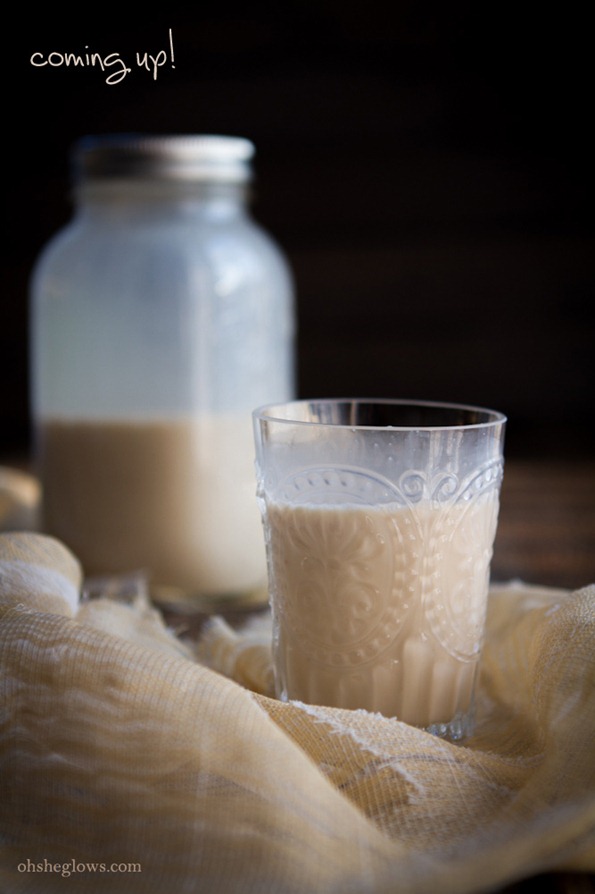
I was already planning a post on homemade milk, but now it seems even more timely and appropriate. Easy, homemade milk coming on up. I think you’ll really like the ingredients list in this one.
Have you heard anything about carrageenan before? Do you avoid it on labels or will you in the future?



What a wonderful follow up post! Thank you so much for taking the time to look up this information and sharing it with everyone. I learned about Carrageenan a while ago but I haven’t committed to completely avoiding, after reading this I think I’ll try going off it and see how it affects my digestion.
Angela, thank you for this thoughtful post and allowing all of us to stop and think about what we’re consuming on a routine basis. I have been drinking Blue Diamond unsweetened almond milk for about a year, usually a little in my coffee and smoothies. I’m willing to switch to the Whole Foods brand to avoid any ingredient that might be questionable, but I was just wondering about the ingredients in the WF brand too!
Ingredients: organic almond milk, tricalcium phosphate, sea salt,potassium citrate, Gellan gum, sunflower lecithin, Santayana gum, vitamin A palmitate, ergo calciferol (vitamin D2), DL-Alpha tocopherolacetate (vitamin E)
Are all of these weird-sounding ingredients really OK? I know the best alternative would be making our own almond milk, which I might try out! But, in the busier times, it would be great to have a store-bought option. Or, perhaps if I’m only having a little of it, neither the Blue Diamond nor the 365 brand will really hurt too much.
I’d love your, or anyone else’s, opinions on the ingredients above!
Dear Angela,
thank you so much for your research on that! I´m too very concerned about Carrageenan. In a recent lecture I attended about food ingredients the speaker recommended just not to buy anything with stuff in it you normally wouldn`t find in your kitchen…
Unfortunately that´s easier said than done, isn´t it?
Hi Angela … a big fan of your blog! Thanks so much for posting this when you found out, I didn’t know about this one either!!! I do make my own Almond or Rice milk now and love it but I use to buy and will be letting others know about this too. I am not sure if this ingredient is in Australian products but I will be doing some research to find out. I also agree with another post about writing to the companies involved … imagine if we all wrote, maybe they’d be forced into action! We should do this about GMO’s too. People power …. thanks again, Kirsty
Sigh, another thing to avoid, with two toddlers and a full-time job sometimes it feels like feeding my family well is another full-time in itself! Of course I want to do what is best for my family. I always mean to make my own nut milks anyways, so much cheaper, I guess this is more motivation to take the time to do it. I’ve been mulling over this subject ever since I got “Artisan Vegan Cheese” for Christmas and have been deciding whether to order carrageenan powder as a thickener as recommended. I just wish that nutritional information wasn’t so confusing, you always have to be on your guard, you can’t trust anyone with a buck in the game to have your best interest in mind.
i’ll stick with Silk despite the political views…their product tastes good and I don’t get an upset stomach from almond milk as I do from dairy…i don’t have time to make my own almond milk right now…5 kids…2 adults….all 7 of us in sports….just not happening. I barely have time for laundry and washing the dishes! Thank you for your post Ang…it’s always good to learn about our ingredients.
Sorry to see that Trader Joe’s Almond Smooth clearly shows Carrageenan on the side panel of ingredients. It also has a lot of other stuff. The other thing to take into account on most of the almond milks that claim to be “fortified” with calcium and D vitamins, they are synthetic substances, especially the vitamin D. Vitamin D is actually not a vitamin, but a hormone that we absorbe through our skin from the sun. No other way and no where else can you get the “real deal”. Vitamin D tablets/capsule are a different substance (cholecalciferol) and, unless you have been tested and know you are deficient….I’d advise against taking it. So, unless I can find an almond milk that is “just” almond milk, I will be making my own.
Yikes!!! I gave up milk about 8 months ago and have been living off a mix of Soy and Almond milk. I live overseas (Germany) and have a limited selection of brands here to choose from. I just went in to my pantry and noticed all of my Soy and Almond milks have carrageenan or another name for it which might be algae Lithothamnium clacareum??? Google says it is red algae so I’m assuming they are the same thing. So now I’m irritated and not sure what I can do to feed my family. I move back to the States this summer so then I will have multiple brands to shop around for but living here in Germany selections are very limited and buying raw almonds in bulk is a non player. Any suggestions are greatly appreciated. Thank you!
Hi Angela! I’ve been following your blog for awhile now, but I never realized that you suffer from IBS. I’ve just recently realized that the problems I’ve been having are due to IBS. I’ve been struggling a lot with figuring out what foods cause problems, so thanks for the heads up on carrageenan!
I’d be curious to hear if you had any suggestions for what snacks you’ve found to be good, and if you have any remedies for when an IBS flare-up occurs.
Thanks for the wonderful blog!
Hi Maria, My IBS has always been on the side of really bad stomach pains, cramps and indigestion. It seems to be highly linked to stress and anxiety for me, and I do notice that I get more pains when I am stressed out or anxious. High fat foods also seem to trigger it too. It’s very hard to figure out though. I think there are a lot of books and websites out there now on IBS so I would suggest reading up on it. All the best to you!
Many of the cheeses in the Artisan Vegan Cheese book use this ingredient so I did some investigating of my own. There are two types of Carageenan depending on how it is processed. The food grade stuff though doesn’t cause these symptoms it is the cosmetic grade stuff that does if it is eaten. At least that is what I read. I’m no expert. But I still think I’ll be buying some powdered food grade Carageenan to make some of the vegan cheese recipes. It is particularly important for the cheese than can melt.
Thank you so much for this post. It was quick and easy to read. I have been meaning to post a similar article to my blog site (www.rootedinnutrition.com). I will gladly link your post to my twitter and other social media. Thanks!
Christine
I found out about this ingredient from Food babe. Do you read her blog? Here’s the post here:
http://foodbabe.com/2012/05/22/watch-out-for-this-carcinogen-in-your-organic-food/
Since then I have been diligent in buying milk that is free of this ingredient. I’m a big fan of Trader Joe’s Vanilla unsweetened almond milk. But the refrigerated TJ almond milk is the only one that is free from it. The shelf stable ones have carrageenan in it. So, I avoid it at all costs. Thanks for the info! Always good to learn together here!!!
P.S. We absolutely LOVE your overnight oats. My kids beg for it…in fact, we just got back from the grocery store so I could pick up ripe bananas just for making oats tonight :)
Thanks for a great kid-friendly recipe! It get’s 2 thumbs up from my 5 and 3 year olds!
I’ve also heard/read somewhere that the vitamin D2 added to these milks is also not good for us.
Vitamin D isn’t ADDED to milk. It is a byproduct of the pasteurization process:
“Vitamin D3 (cholecalciferol) is produced by ultraviolet irradiation (UV) of its precursor 7-dehydrocholesterol. This molecule occurs naturally in the skin of animals and in milk. Vitamin D3 can be made by exposure of the skin to UV, or by exposing milk directly to UV (one commercial method).”
As for non-dairy milk, I don’t know how good the synthesized D is for us. Just get a bit of sun each day and let your body produce it’s own.
Super interesting… thanks for sharing this. I think most people who suffer from irregular bowel movements share the same frustration over trying to figure out what the actual cause is and why it’s not going away! Trying to deal with IBS, or any other digestive issue, can feel like the biggest headache at times. It’s like a cycle of trying to record food intake and digestive functioning for a few days, thinking OK maybe I found the culprit -I’ll cut that out…. and then only to come a few days later that the same problems are back.
I’m so glad that you shared this and will just give those struggling from this problem greater hope for a solution! Thanks :)
Good to be informed but I really do hope that we all relax about food a bit more. Up until a few months ago I became so obsessive about eating ‘healthy and ethically’ that I was terrified of food. The world will never be perfect – when I realised that my whole life changed. I love your blog Angela but I just hope we have not started mass obsessiveness of food.
As someone who also suffers from IBS, I took out dairy and noticed a huge difference in the way I felt. I make tea with almond milk each morning, but still felt ‘off.’ I started wondering if the almond milk had something to do with it. IT DID! I now make my almond milk at home….and hazelnut milk….and cashew milk. It’s so easy, so fresh, and nothing weird in it to worry about. Adding dates and vanilla beans is glorious! :) Looking forward to your next post. Thanks Ang!
Funnily enough, I just made some almond milk on the weekend. First time in awhile. It was really pretty easy. Sure would be nice to replace all packaged goods, vegan or otherwise with homemade :). It would be nice to know what the people who decide which ingredients go into a product, are thinking?
I knew about carageenan as a thickening agent before, but not as a possible inflammatory agent. I won’t avoid it entirely until I see more 3rd party evaluations, but I do think I can choose products without it, given equal choice (not a large price or quality difference).
Note: some health-brand toothpastes use carageenan to help keep it more like a paste than a runny mess, so be aware of that. I avoid fluoride, so unless I switch to little kid toothpaste, I must stick with the carageenan stuff or attempt to brush with straight baking soda….
I also buy the unsweetened whole foods brand of almond milk as its the ONLY one I’ve found without carrageans!
Well, that does it for me. I’m going to soak some almonds for almond milk as soon as I get home.
It’s somewhat tiresome switching from brand to brand anyway, isn’t it? I switched from Silk to Almond Breeze due to the GMO issue, and there aren’t any other brands available locally to me.
When it comes down to stuff like this, it may harm you or it may not, but why risk it really? It’s just an excuse for me to make more of my own foods, and an excuse to buy more mason jars, which is a win, win, right?