
In my post, Replacing Dairy Milk, a few of you commented that you avoid several brands of non-dairy milk because they contain an ingredient called carrageenan. This was the first time I had heard anything about this ingredient, or at least the first time I took any notice. I assumed that it was a safe ingredient, especially because it is found in some organic products. But as we know, just because something is allowed in our food does not mean it’s necessarily good for us. It’s frustrating as a consumer to believe we are buying quality ingredients only to find out they could be harmful to our health.
Anyway, I knew I had to look into this further. And I don’t like what I’m reading. In fact, I’m pretty ticked off.
At first blush, carrageenan sounds seemingly harmless – it’s derived from red seaweed and is used as a thickener, stabilizer, and/or emulsifier in many dairy (sour cream, yogurt, ice cream, etc), dairy alternatives (non-dairy milk, non-dairy cheese, etc), and deli meat products. As it turns out, research links carrageenan to gastrointestinal inflammation, lesions, and even colon cancer in animals. Individuals with Inflammatory Bowel Disease or other gastrointestinal disorders are cautioned to avoid this ingredient as it can make symptoms – and inflammation – even worse. As someone who has suffered from IBS for many years, I was shocked to find this information out. This was the first I had heard of it.
For a review of the research on carrageenan see this PDF document by Cornucopia.org. Please look into this ingredient and make your own informed opinion.
For a long and detailed list of carrageenan in many dairy and non-dairy food products (and safe products as well), please see this Cornucopia shopping guide – it’s extremely helpful. You might be surprised at many of the brands that contain this ingredient. I know I sure was.
I realize there is no conclusive evidence with regard to human consumption of this ingredient, but I’m not willing to take that risk when there are other options, especially because I have suffered from IBS on and off for half my life. I will no longer support President’s Choice Organic Almond Milk or Blue Diamond’s Almond Breeze – two of several brands that contain carrageenan. Instead, I’m going to purchase Whole Foods 365 organic almond milk which is one of the carrageenan-free brands or I will make my own milk at home (more on this in my next post). I’m anxious to see if I notice a difference.
For the complete list of carrageenan-free products, be sure to check out the shopping guide linked above.
As I mentioned in my intro post, we have a lot to learn from each other and this is a perfect example. I’m thankful for all of you sharing your experiences and knowledge in the comments. I’m learning too. I hope that by writing about this today, more awareness is brought to this ingredient. With other thickeners/emulsifiers readily available (such as organic guar gum and organic locust bean gum) there is no excuse for food businesses to continue to put carrageenan into our food at the potential risk of our health.
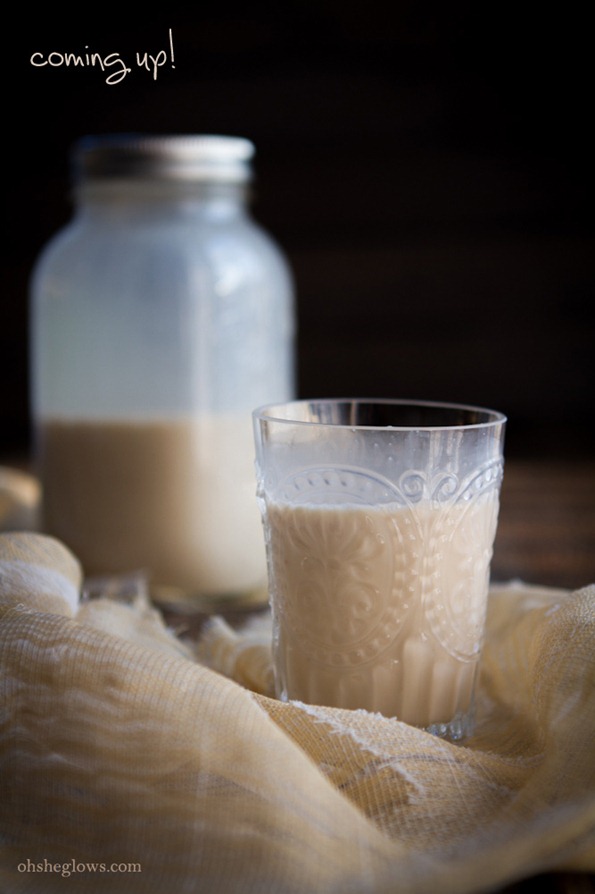
I was already planning a post on homemade milk, but now it seems even more timely and appropriate. Easy, homemade milk coming on up. I think you’ll really like the ingredients list in this one.
Have you heard anything about carrageenan before? Do you avoid it on labels or will you in the future?



So, someone just posted this link over at Herbivore’s fb post about getting in carageenan for folks that want to make vegan cheese. My response to that person is below. I thought you should see it as well. Here’s the link, my comment is below. http://on.fb.me/VjiBH8
So, it turns out the hardest part of being vegan is actually other vegans—vegans that hear one or two bits of information, don’t question the source, don’t do further research, and then repost said info over and over. Come on folks, it took me all of two minutes to do the research the author of Oh She Glows should have done before posting her irresponsible post that cites the Cornucopia Institute’s work on the topic. Did she bother to ask who Cornucopia is or did she just take that their name sounds nice so they must be nice, and honest, and without any financial motivations for turning folks off of vegan products. Did you, Monica, ask any of those questions before posting her link here?
Here’s what I found—in two freaking minutes. And, please let this be a lesson next time you see something suggesting an ingredient in a non-animal based product is problematic. ASK WHO BENEFITS FROM PROMOTING THAT INFO. I’m guessing more often than not, you won’t have to dig too deep before you find a dairy/meat industry connection or a Weston A. Price connection. Stop falling for this crap, vegans! You’re supposed to know—more than the average consumer that nothing is what it appears to be and that money—lots and lots of money—is typically pushing most everything you see on TV and read on the internet. The first time I became suspicious about the milk board using carageenan as their latest scare tactic was when I noticed the emphasis they were placing on it in their current round of idiotic anti non-dairy milk commercials. They’re intending to build steam around this and you’re helping them!
Below are bits and pieces from the bios of Cornucopia’s founders and Board of Directors. Enjoy, suckers!
Mark Kastel is co-founder of The Cornucopia Institute, a populist farm policy research group based in Wisconsin and acts as its Senior Farm Policy Analyst. He directs its Organic Integrity Project.
Mr. Kastel has played a key role in a number of cooperative ventures designed to empower farmers in the marketplace. His development work has focused on creating sustainable farmer-owned businesses with an emphasis on dairy production and marketing.
Kastel, who worked for agribusiness giants International Harvester, J.I. Case and FMC before making the paradigm shift to sustainable farming…
Will Fantle is co-founder of The Cornucopia Institute. He is also the organization’s Research Director.
Mr. Fantle has also worked as webmaster for the Wisconsin Stewardship Network, a coalition of the state’s hunting, fishing and environmental groups.
William Heart, Ashland, Wisconsin Mr. Hart is a hunter and fishermen…
Roger Featherstone, Tucson, Arizona (Treasurer)
Mr. Featherstone grew up on a small family dairy farm in southern Wisconsin that has been operated continuously by the Featherstone family since 1847.
Helen Kees, Durand, Wisconsin
Ms. Kees is an organic beef farmer and fresh-market vegetable producer. She grew up on a dairy farm near Durand, Wisconsin. A tussle with a neighbor’s pesticide overspray in the early 1990s opened her eyes to the health and environmental concerns associated with the use of agrichemicals. She later became the first certified organic beef farmer in the state of Wisconsin.
Amanda Love, also known as “The Barefoot Cook” is a Certified Healing Food Specialist, Natural Foods Chef, Nutrition Educator, Weston A. Price Foundation (WAPF) Conference Chef and recent recipient of the Weston A. Price Food Activist Award.
Dave Minar and his wife Florence live on the farm that Dave’s Grandfather bought 85 years ago. Dave is a third generation dairy farmer.
The farm was converted to a grass based dairy farm in the early 90’s, and a direct marketing meat business was started with grass fed and finished beef, pork, turkeys and chickens. This evolved into an on-farm creamery and retail store where extra value was added to the milk. Currently, Cedar Summit milk is distributed throughout the upper mid-west.
Kevin Engelbert is the owner/operator of Engelbert Farms, the first certified organic dairy farm in the US, certified since 1984. He farms about 1,800 acres with his wife Lisa and three sons, and produces organic milk, veal, beef, pork, pasture, hay, corn, soybeans, and vegetables. Kevin is a fifth generation dairy farmer in New York State…
I just read this article and don’t have Tim to read through the comments so I don’t know if it’s been mentioned, but aside from containing carageenan, store bought non-dairy milks all (as far as I’ve seen) contain the synthetic form of Vitamix D, which is D2 as is not healthy. D3 is the one you want. Look into it for yourselves; I need to again so I’ll remember what’s bad about it.
What really saddens me is that the US allows this in baby formula…. Europe doesn’t
Hi Angela,
I’m just curious about why my comment never showed up? Do you think it’s okay that virtually everyone from the founders to the board members of The Cornucopia Institute are financially connected to dairy and meat farming and marketing? Do you think it’s okay that they obviously have a FINANCIAL interest in scaring people away from non-dairy products and yet you’re promoting their work here on your vegan blog? Do you think it would be fair to at least point out the conflict to your readers?
I’d love to hear why you censored my original comment and what you think about the issues I’ve raised here.
Thanks!
Hi Chris, Absolutely no comments have been censored from the post. Take a closer look – your comment was approved the day you left it. Good grief.
Thanks Angela,
I saw it after I sent the last one. Unfortunately, there was no way to delete the comment. I’m sure it’s happened before and isn’t really that big of a deal—probably not worthy of so much “good grief”. What would be appreciated though is an answer to the other questions I’ve posed. Thanks.
I wanted to stop by and say thank you again for this post. It has changed the way I buy non-dairy products and I have written to Almond Breeze in Australia to let them know I’ll no longer be buying their milks. I’ve also just done a post on the issue in relation to Australian products and have linked back to you; I hope that’s ok.
i came to this page because i was looking into this very issue, but i wanted to let you know what i found out. there are 2 main kinds of carrageenan (with sub-classes) hydrolyzed & unhydrolyzed. the hydrolyzed carrageenan is the kind that produces these unwanted side effects that you discussed. but only the unhydrolyzed type is allowed by the FDA into food. even though i don’t trust the FDA, they did block this particular unsafe ingredient. so for me, i’m going to keep buying my almond breeze guilt-free. :)
One more reason we Must read ingredient list
Was made aware of this a few years back…have been making my own milks for quite some time. It is in many items!
I also heard that carrageenan may increase the inflammation in certain cases of arthritis…
Thanks for backing up this info!
I believe there are at least 25 additives that like “Carrageenan” cause imflammation and cause a host of other problems. MSG is a nasty word to most consumers by todays standard. But you need to look up on the internet and learn how MSG is still out there under “New Names”. The food industry is literally getting away with slow murder because of the laws that now protect them. I was raised on Raw Milk. The only “Process” raw milk goes through is the straining of the cows milk prior to pouring the milk into a large stainless steel refridgerated tank. Thats right… “the ONLY process”. Absolutely nothing is added to it. The only problem is the state governments have outlawed raw milk in most states. Not all states. Interestingly enough is the fact that during the Pasteurization process, all but maybe 10 or more enzymes that is beneficial to us are destroyed by this process. The enzymes that we really do need are never consumed because of Pasteurization. Another fact of raw milk and the cream that settles to the top of a gallon jar is that the products made from this raw cream such as yogurt, butter, cheese …etc… all have a more longer shelf life simply because of those important enzymes. Basically, the aging process actually makes these products more healthier.
POINT : It is only my opinion…. but, our government wants us to die by attrition. Meaning we live, work, pay there taxes, and then die just before we retire. Look in your cupboards and refridgerators after looking up those “other names for MSG” and ask yourself why.
Something to think about – this is from WiseGeek.com:
“Several studies in the early 2000s suggested that a certain type of carrageenan — degraded carrageenan, which has been hydrolyed, or broken down by acid — could cause gastrointestinal problems, including cancers. The degraded type is not typically used in food. In fact, only the undegraded variety has been deemed safe for human consumption by the Joint Expert Committee on Food Additives (JECFA) and approved for use in foods by the Food and Drug Administration in the US.”
According to WebMD, extremely high doses of carrageenan have been used as medicine (http://www.webmd.com/vitamins-supplements/ingredientmono-710-CARRAGEENAN.aspx?activeIngredientId=710&activeIngredientName=CARRAGEENAN)
Not trying to disagree, as I’m sure a lot of people could have sensitivities to it, I just thought other information should be out there. :)
I just found your blog recently, and I’m thrilled about what I see! Loved the almond milk recipe, and looking forward to trying my hand at oat milk! I wanted to comment about IBS. I struggled with that for several years, eliminating things from my diet, and nothing seemed to make a difference or show any pattern (except stress). Then, an aquaintence said to try eliminating all BLACK pepper from my diet (which I liked a lot so–no surprise–ate on a regular basis) and surprise, surprise after a week or two all my symptoms completely went away! It was such a simple thing, but it is hard to avoid when eating out. I started getting lax about the pepper this year, without thinking about it, and eventually my symptoms returned. Again I became careful again, and the symptoms left. It could be worth a shot to try.
Sign this petition to remove carrageenan, and let the FDA know that it’s time to act in the interest of our health and safety. Carrageenan is a dangerous food additive, and should be removed from the list of allowed additives!
http://www.cornucopia.org/carrageenanfda/#petition
I’m beyond disgusted that most commercially available almond milks use carrageenan as an ingredient. I’ve researched the major brands and most include it as an igredient. I would wager a guess that most of the people buying almond milk are doing so as a substitute for dairy – either health or ethically motivated. If so, the addition of an unnecessary and possibly harmful ingredient makes no sense at all.
I’ve called the company where I was getting my almond milk and they could give me no good reason for adding it as an igredient. It spurred me into action using your recipe to make my own. It was SO easy – and superior to the boxed store bought brand.
I had read about carrageenan before, and have been checking labels and avoiding it. I have also switched to drinking coconut milk, which I like and know is healthy, or thought it was until today. I didn’t even think to check the label. I drink Silk Pure Coconut (non GMO verified.) So, after reading your blog, I checked my milk, and sure enough it has carrageenan in it. :( Bummed. We are pretty limited with brands in my small town, so there aren’t many options for me. I guess I really haven’t noticed any digestive issues yet, but probably will try to find some alternatives!
Dear O.S.G.,
“IBS” is NOT an inflammatory condition. Inflammatory bowel disease (IBD) includes ulcerative colitis and Crohn’s; but never irritable bowel syndrome (IBS). IBD is an autoimmune inflammatory condition. People with IBS have normal colonoscopies and lab work. However their nervous system has been re-wired, frequently due to continuous low level childhood stressors (such as living with a depressed or addicted parent), resulting in normal stimuli such as stretching of the colon wall, causing stimulation of the pain center of the brain, as well as the area in the brain that perceives unpleasant emotions. Research on this phenomenon assumes the continual bathing of the nerves in corticosteroid hormones released due to stress causes this abnormality in nerve pathways.
PS:
1c raw almonds
4 c water
1/4 tsp salt
Blend until liquified. Strain if necessary.
Just as a heads up though…vivisection is not a concrete test. As a vegan, I would expect that you don’t support animal torture since thats what researchers do and it is not conclusive unless of course you test on humans.
I know it has it’s downfalls, but I too am a SILK Almond Milk drinker. Avoiding carageenan has been important to me (a LOT of cancer in my family, including my 13 yr old daughter who we lost to Osteosarcoma). Whole foods have become a priority to me, and since going plant based, I am now migraine free (after 8 years of daily migraines).
I would much rather support a different brand, and have considered making my own almond milk…. but the one thing that has me going back to SILK is that it has the vitamin B12.
I’d love to hear how others are getting their B12 when following a vegan diet….
Hi Angela – I was wondering if you found any information on using the fresh irish moss instead of the carragenan – that is highly processed?
thank you for all you do and for sharing yourself, your journey and your joy!
Has anyone else notice that Trader Joe’s has removed the carageenan from their almond milk? I had stopped buying my favorite (Unsweetened Vanilla) and picked it up off the shelf to read over the ingredients the other day and the carageenan is GONE! I can’t find any articles about this change online but OH HAPPY DAY! I am thrilled :)
If Trader Joe’s removed carrageenan from their Almond Milk, it is NOT because they have deemed it unsafe and pulled it from their products, it is purely coincidence. I have just today received an email from them in which they state carageenan is 100% safe and they would not use it otherwise. They still have PLENTY of products that use this ingredient (their yogurt slushers for kids, coconut yogurt cups, coconut milk, and more).
This is my reply from TJs (with her name removed)
Dear Kat,
We appreciate you taking the time to share your thoughts, and for bringing your comments and concerns about carrageenan in our Trader Joe’s Private Label Products to our attention. Please know that nothing is more important to us than the health and welfare of our customers and crew, and the quality and safety of our products.
If we had any reason for concern, we would not continue to supply any product in question or use that supplier. Apart from all suppliers (international and domestic) being held to the high FDA safety standards, we have our own stringent QA requirements on all products – we will not offer an item that we, ourselves, at Trader Joe’s would not buy and enjoy.
Here is what we know: Carrageenan is safe, natural plant derived gum. A natural polysaccharide (carbohydrate) extracted from red seaweed, it is a functional ingredient for stabilizing, thickening and mouth feel (as in smoothness). There are 2 types of carrageenan and it is only Food Grade (purified un-degraded natura) that is federally permitted in food. Non-food grade Degraded (chemically treated) is federally prohibited from use in food.
As we greatly value your feedback below, I have shared your email with our Product Steering Committee for consideration. We will continue to work our hardest to earn and maintain your confidence and trust.
You may, of course, return any product in which you are dissatisfied to your local Trader Joe’s for a full refund – even the empty package will do.
Sincerely,
Customer Relations
I just checked my fridge and the Silk brand Almond milk does NOT appear to have it either.