
In my post, Replacing Dairy Milk, a few of you commented that you avoid several brands of non-dairy milk because they contain an ingredient called carrageenan. This was the first time I had heard anything about this ingredient, or at least the first time I took any notice. I assumed that it was a safe ingredient, especially because it is found in some organic products. But as we know, just because something is allowed in our food does not mean it’s necessarily good for us. It’s frustrating as a consumer to believe we are buying quality ingredients only to find out they could be harmful to our health.
Anyway, I knew I had to look into this further. And I don’t like what I’m reading. In fact, I’m pretty ticked off.
At first blush, carrageenan sounds seemingly harmless – it’s derived from red seaweed and is used as a thickener, stabilizer, and/or emulsifier in many dairy (sour cream, yogurt, ice cream, etc), dairy alternatives (non-dairy milk, non-dairy cheese, etc), and deli meat products. As it turns out, research links carrageenan to gastrointestinal inflammation, lesions, and even colon cancer in animals. Individuals with Inflammatory Bowel Disease or other gastrointestinal disorders are cautioned to avoid this ingredient as it can make symptoms – and inflammation – even worse. As someone who has suffered from IBS for many years, I was shocked to find this information out. This was the first I had heard of it.
For a review of the research on carrageenan see this PDF document by Cornucopia.org. Please look into this ingredient and make your own informed opinion.
For a long and detailed list of carrageenan in many dairy and non-dairy food products (and safe products as well), please see this Cornucopia shopping guide – it’s extremely helpful. You might be surprised at many of the brands that contain this ingredient. I know I sure was.
I realize there is no conclusive evidence with regard to human consumption of this ingredient, but I’m not willing to take that risk when there are other options, especially because I have suffered from IBS on and off for half my life. I will no longer support President’s Choice Organic Almond Milk or Blue Diamond’s Almond Breeze – two of several brands that contain carrageenan. Instead, I’m going to purchase Whole Foods 365 organic almond milk which is one of the carrageenan-free brands or I will make my own milk at home (more on this in my next post). I’m anxious to see if I notice a difference.
For the complete list of carrageenan-free products, be sure to check out the shopping guide linked above.
As I mentioned in my intro post, we have a lot to learn from each other and this is a perfect example. I’m thankful for all of you sharing your experiences and knowledge in the comments. I’m learning too. I hope that by writing about this today, more awareness is brought to this ingredient. With other thickeners/emulsifiers readily available (such as organic guar gum and organic locust bean gum) there is no excuse for food businesses to continue to put carrageenan into our food at the potential risk of our health.
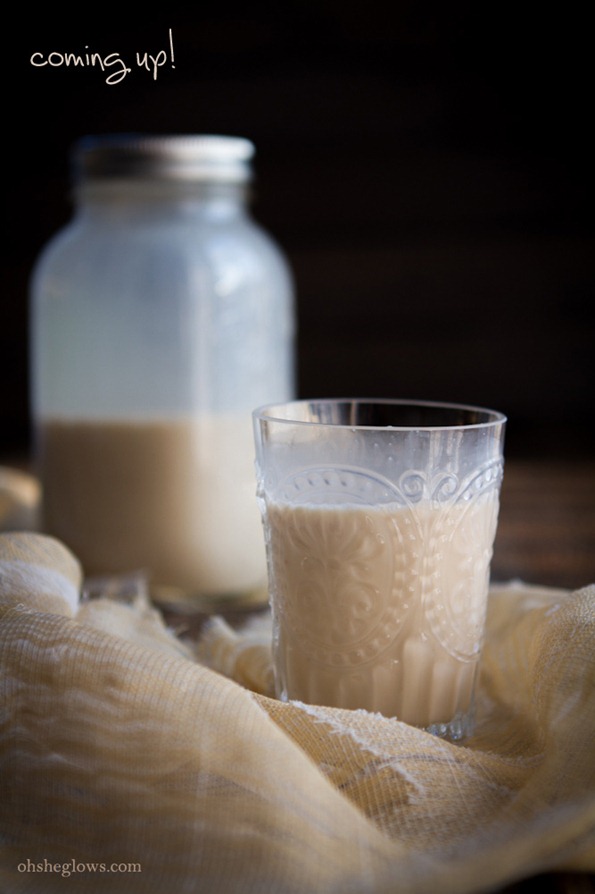
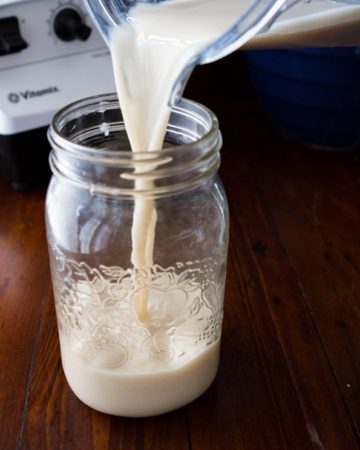
I was already planning a post on homemade milk, but now it seems even more timely and appropriate. Easy, homemade milk coming on up. I think you’ll really like the ingredients list in this one.
Have you heard anything about carrageenan before? Do you avoid it on labels or will you in the future?


So glad you posted this! I’m gluten intolerant and dairy allergic and found I kept having food issues even when I was making everything myself in my decontaminated kitchen. Then my friend, who discovered a nightshade allergy last year, mentioned she was avoiding it so I did some digging and read over and over again that it is suggested that people with food allergies/intolerances/sensitivities avoid this ingredient. Yet it’s shocking the number of food alternatives that INCLUDE it. I appreciate you bringing all of the this great info together.
Wow, never heard of it, but who’d have thought stuff from seaweed could be so bad for you. Dang, now I need to watch out for carrageenan in addition to 5 million other things…
Please be very careful and informed when buying organic. PLANET ORGANIC AND WHOLE FOODS buy the majority of their nuts from CHINA AND SOUTH AFRICA. Read the fine print after organic and find the origin. After doing some research I am sure you will be extreamly surprised at how these super markets have been taking advantage of us.
GASP! I heart my friendship 1% cottage cheese. So sad…thank you for the info and the shopping guide link. BUMMER
I emailed Blue Diamond about the carrageenan in their products and this was their response:
CARRAGEENAN INGREDIENT
What is Carrageenan?
The purpose of Carrageenan in Almond Breeze is used as an emulsifier and suspending agent. There is a very small amount used
– less than 0.2% by weight.
What are the principal categories of Carrageenan?
There are two different categories of Carrageenan:
1) “food grade Carrageenan” and
2) “degraded Carrageenan”. “Degraded Carrageenan”, also known as “poligeenan”, is chemically different than
“food grade Carrageenan” and is made using a different process.
They are not the same compounds and are used for different purposes. “Degraded Carrageenan” is used in no-food industrial application. “Food grade Carrageenan” is used in foods.
FOOD SAFETY
There have been numerous studies conducted and articles written discussing the safety of Carrageenan. Some studies have reported that Carrageenan may cause cancer. These reports have caused consumer concerns about the safety of Carrageenan in foods. It is important to note that the major studies linking Carrageenan with cancer used “degraded Carrageenan” and nor “food grade Carrageenan”.
The US FDA, the UN FAO/WHO Joint Expert Committee on Food Additives, and the European Commission’s Scientific Committee on Food, have all concluded that “food grade Carrageenan” is safe to use in foods. “Degraded Carrageenan” is not approved for use in foods.
BLUE DIAMOND’s POSITION:
We believe that the current available information supports the position that “food grade Carrageenan” is safe and appropriate for use in our food products. We only use high quality “food grade Carrageenan”. We do not used “degraded Carrageenan”.
Sincerely,
Pam Schiller
Assistant Consumer Advocate
BLUE DIAMOND GROWERS
(800) 987-2329; toll free
e-mail: [email protected]
THANK YOU for this post. Im about to start a 50 day “whole foods” challenge and was debating on whether to allow almond milk. I was leaning towards “yes” and then I read your post. Scary stuff. And you are right, it is frustrating to see how many non-food items are added to our so-called “healthy” foods. Ive been scouring ingredient lists for the past week and am horrified. SO MANY ADDITIVES :( Im excited to try your alternative milk recipes. Didn’t you post an almond milk recipe once? THANKS!
no reason to buy nut milk when it only takes minutes to make at home :o) i use a soyabella to make my milks, once made it throw it in the blender to mix a lil’ honey and cinnamon. the whole process takes 10 min plus another 5 to wash the my machines :o)
I just found your blog, and I love it. I tried one of your pasta recipes, and it was delicious. Even though I made vegan avocado pizza (avocado as replacement for tomato sauce), I have never thought about using it as pasta sauce. Can’t wait to try. Now, back to milk, I use only brands without it, because I read several serious reports (don’t remember where) about that ingredient fueling cancer. Really, things that are not found in nature, should not be eaten. It is that simple. Soybeans are great in natural form, but soy milk, tofu, soy protein powders and similar products are all dangerous. Silk Almond milk is OK, and can be found in most supermarkets, but home made milk can be made to taste delicious.
I find choosing the “right” foods oh so confusing. We’ve just started the switch to being vegan and were thrilled to find one of these brands had a creamer that tasted great in coffee. I’m now researching cashew coffee creams that I can make at home to avoid all of this stuff. There’s a big time commitment to eating healthy!
I found out about Carageenan..also hidden in our foods as additive 407 just before Christmas on a wonderful Blog called My Whole Food Life (http://mywholefoodlife.com/) and was horrified at how it has the potential to be carcinogenic yet is in so many everyday foods…people need to be educated about it so make their own informed choices…thanks for this post!
I could not find the Canadian organic soy milk brand “So Nice”on either list so I googled it and found this response from the company on their facebook page. I must say, based on their response, I am quite torn. What do you think?
“Upon consultation with our internal and external technical resources, our findings support our decision to use this ingredient as a stabilizer in our vitamin and mineral fortified products, like So Nice. Please allow us to elaborate.
Carrageenan is naturally occurring family of carbohydrates extracted from red seaweed. We specifically use non-degraded Kappa seaweed. It is used in our products to suspend calcium and vitamins, as they would settle at the bottom of containers without this additive.
The controversy on carrageenan is based on an article by a Dr. Tobacman who used degraded carrageenan in her studies (molecular weight of less than 30,000). Now, you should know that degraded carrageenan is not used by any suppliers in the food industry. There was a joint FAO/WHO food additive meeting in Rome in June 2001 at which carrageenan was reviewed by a panel of experts and classified as “ADI not Specified”, which is the safest classification. It can be difficult sifting through all the information on the Internet because some of it is contradictory but considering the findings of the FAO/WHO organizations, we chose to accept their position on the matter. Overall, the carrageenan sold as a food, drug, and cosmetic additive has been tested extensively, and regulatory authorities worldwide have uniformly found carrageenan to be essentially nontoxic and agreed that it may be used safely in food.
For more information on carrageenan please follow this link (be sure to check the links to the sources cited here also): http://nutrition.about.com/od/foodadditives/f/What-Is-Carrageenan.htm”.
Hi Angela! First off, I love your blog and ingenious recipes. I’ve had more success with your recipes being a hit with my family than almost any other vegetarian/vegan blog (and they can be a tough crowd to please sometimes). Thank you for sharing this post and for your thoughtful research on carrageenan. It’s refreshing to see a food blogger who genuinely cares about what is going into their readers bodies and asks them to form their own decisions based on facts.
I’ve been a vegetarian for years, but even before that I constantly struggled with two things: animal rights and the quality of/ingredients in our food. I personally believe that many of the vegan substitutes (i.e. cheese, yogurts, milks) give consumers the idea that they are “healthy”, but they contain ingredients that I would never use if I made the product from scratch. Take almond milk for example. When I make it at home I use almonds and water. That’s all. Store bough almond milk often contains the following: almonds, water, calcium carbonate, tapioca or rice starch, sea salt, potassium citrate, carrageenan, sunflower lecithin, natural flavors and vitamins. Yes, some things are needed to preserve foods but knowing where my food has come from and what has gone into it is invaluable to me. What are your thoughts?
I have tried to eliminate carrageenan from my diet for several years after reading this Ray Peat article.http://raypeat.com/articles/nutrition/carrageenan.shtml
I don’t have a Wal-mart “supercentre” in my hometown (just a regular Walmart), so I don’t have great access to it, BUT “Wholesome Goodness” organic non-dairy soy and almond milk does not contain this nasty stuff. I need to look into the other ingredients listed a bit more (some don’t seem familiar to me), but it tastes really good (the Vanilla soy is delicious as a latte!) :) Check it out!
Thanks for this post! I went to a nutrition class sponsored by my local gym which included a “shopping trip” to the grocery store. It was a wonderful class with a lot of good information, and one thing she mentioned was how more and more companies are using carrageenan in their products as it makes it creamy and thicker and to watch for it… but when I questioned her further, she wasn’t quite sure what the problem with it was. So I did a search to find out more and ran across this post and your wonderful information. Great site and I can’t wait to try some of your delish-looking recipes!
Thank you for writing this post! I am always saying that this stuff is bad. I just started making my own almond milk. It tastes great and I can control all the ingredients and sugar. If I don’t need that stuff to make my milk, why do they? If you are looking for store bought non dairy milk, you can look at Pacific. I get the oat milk for my daughter and it doesn’t contain carrageenan. Love your blog by the way. :)
It is great that carageenan is getting so much attention these days.
I thought I had my IBS figured out for the most part, but sometimes it would come roaring back with a vengance, usually after I switched brands of some dairy substitute. That was 5 yrs ago. My allergy doctor had heard about carageenan, and thought it might be the culprit, it seems to have been so. The problem is that it isn’t always listed as an ingredient. So I stick to the brands I know I can handle.
Oh, no! Just bought some of TJ’s “Almond smooth nondairy beverage” and sure enough…it’s got it :(…..ahhh, and so does the coconut milk. Here’s to hoping my IBS doesn’t come back after 7 or so years….
http://meghantelpnerblog.com/2012/07/10/ensure-and-the-carrageenan-conspiracy/
I’m VERY pleased to have finally solved a long-time mystery. For some time I’ve been in the habit of having a small bowl of “reduced calorie” ice cream after dinner. EVERY night after having had any type of ice cream (at first I thought it was chocolate, and eliminated it-with no relief), within about 4-6 hours I’ve had mild to severe attacks of acid reflux. On a few occasions I’ve aspirated some of the bile, but have been able to cough (very painfully, by the way), and clear it. I began sleeping sitting up, which reduced the severity of the attacks, but didn’t stop them. I’d heard the story about Freeon having been used in ice cream, so I read the labels of several brands of ice cream, never finding reference to ANY chemical that works like Freeon. When I saw “Carrageensn” on my usual ice cream’s container, I read about it and was horrified about what it can cause. Since then I have completely stopped eating ice cream (and many foods that contain this wicked substance), and Voila! No more acid reflux attacks…period. THANK YOU FOR THIS INFO & THE WONDERFUL RELIEF IT HAS BROUGHT ABOUT!