
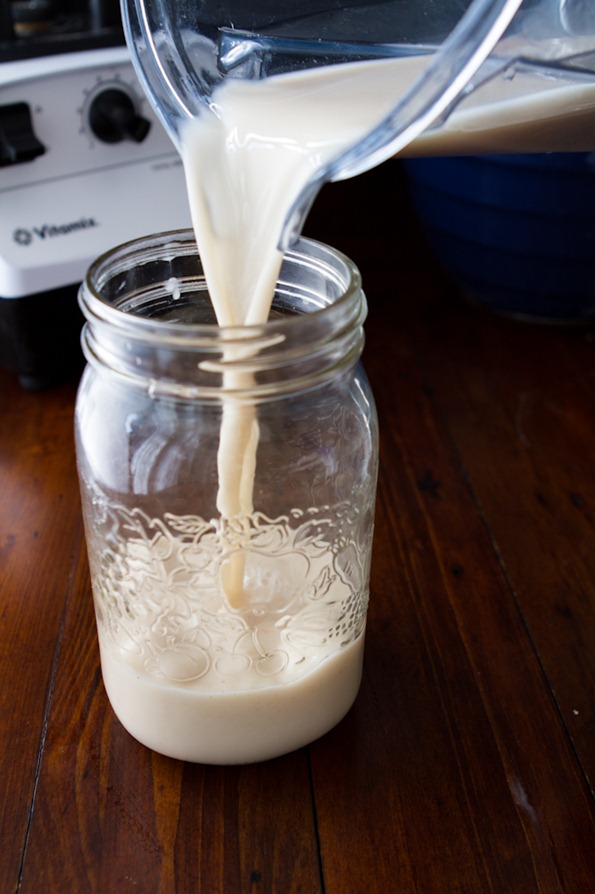
When I mentioned that I was working on a homemade milk post many of you asked for a low-cost and nut-free homemade milk recipe. I decided to put myself to the challenge. Homemade Oat Milk, it is!
First, I’ll show you how I made it with step-by-step photos and at the end of my post I’ll share my thoughts on flavour, price, texture, and overall pros and cons.
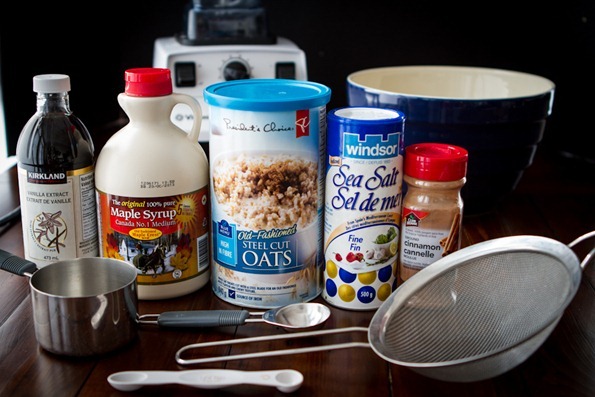
You will also need a blender (any blender should work as we don’t need to blend the oats super smooth), a fine sieve, a large bowl, a small bowl, and measuring spoons/cup. I haven’t tried this oat milk with cheesecloth or a nut milk bag yet, but if anyone does please leave a comment and let us know how it goes.

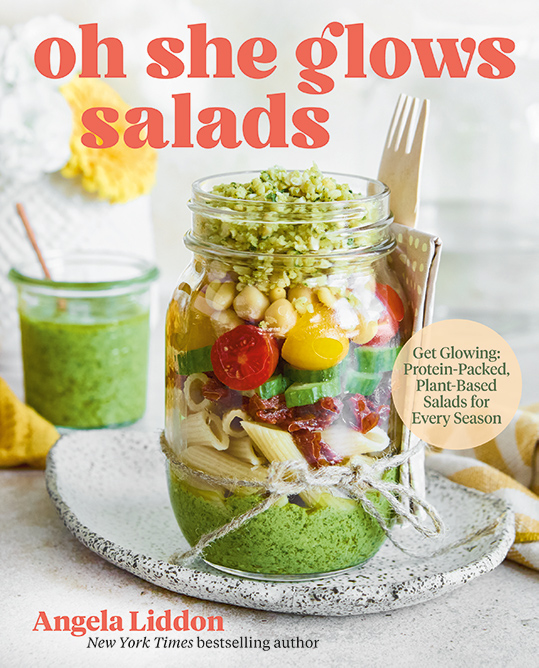
Featuring all new, protein-packed salads, hearty toppers, flavour boosters, and dressings you'll want to drink, my new cookbook will transform the way you think about salads. Oh, and be sure to flip to the back for a surprise dessert chapter!
Homemade Oat Milk

Yield
3 cups
Prep time
Cook time
0 minutes
Total time
Ingredients
- 1 cup steel-cut oats
- 3 cups filtered water
- 1.5-2 tbsp pure maple syrup (or other liquid sweetener or pitted dates), to taste
- 1 tsp pure vanilla extract
- scant 1/4 tsp fine grain sea salt (enhances flavour)
- 1/4 tsp ground cinnamon (optional, but nice)
Directions
- Rinse and drain 1 cup of steel-cut oats. [I’ve heard you can also use oat groats.} Place oats into a bowl and cover with water. Soak for around 20 minutes. You can soak longer (even overnight) if desired.
- After soaking, rinse and drain the oats very well. This step is very important because you want to rinse off any of the oat slime that has occurred from soaking. Yes, oat slime is a thing...it happens.
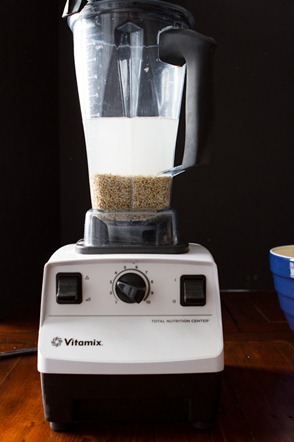
- Scoop oats into your blender and add 3 cups water. I prefer using 3 cups of water as opposed to 4 cups because it yields a creamier/thicker milk. Feel free to add more water if you wish, just know the more water you add the thinner your milk will be.
- Cover with lid and turn the blender on a low speed, increasing the speed gradually, and blend at the highest speed for about 8-10 seconds only. You don’t need to completely pulverize the oats.
- Place a fine sieve over a large bowl and pour the oat milk very slowly into the sieve. You might have to do this in a couple batches depending on the size of your sieve.
- With a spoon, gently push down on the oat pulp so the milk flows through. This helps push the milk into the bowl, leaving the oat pulp behind in the sieve.
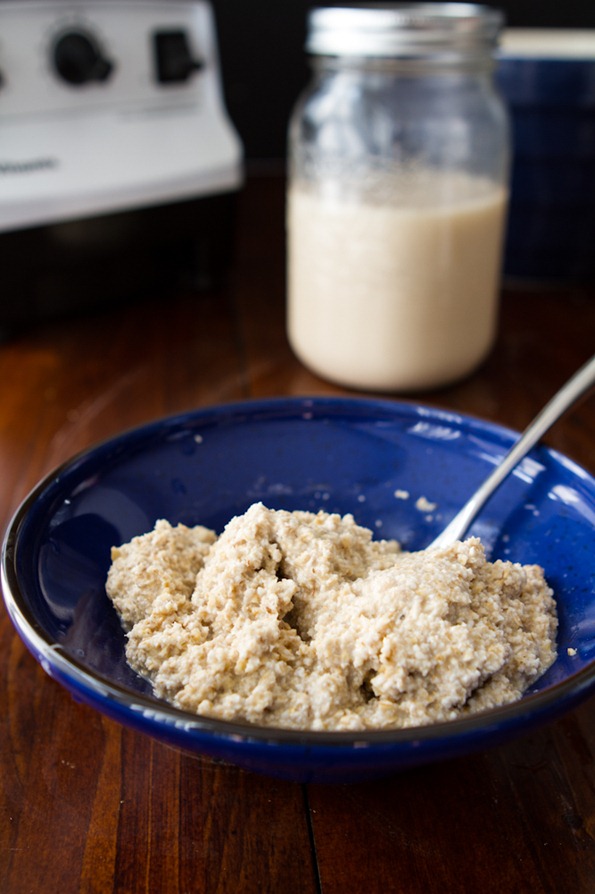
- Scoop the oat pulp into a small bowl and set aside. Clean out your blender and sieve with a good rinse of water until no pulp residue remains.
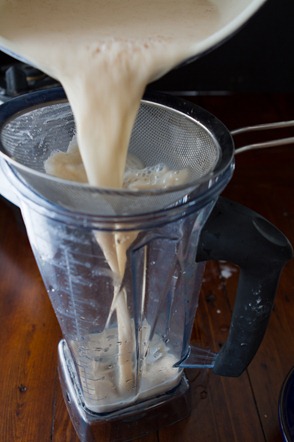
- Place sieve over top of your blender and pour the milk in once again and strain.
- Rinse out the bowl and sieve once again. Strain the milk through the sieve into the bowl (optional). If you don’t want to strain again, simply add in your mix-ins and blend on low.
- I whisked in 1.5 tbsp maple syrup, 1 tsp vanilla, 1/4 tsp fine grain sea salt (enhances sweetness), and 1/4 tsp cinnamon. These mix-ins turn your oat milk from bland to hmm-this-could-be-decent-when-cold.
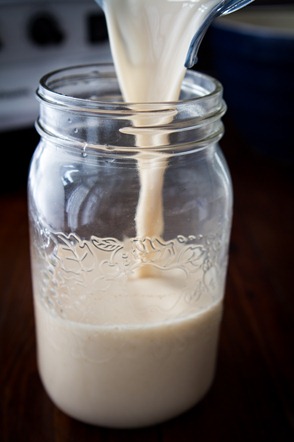
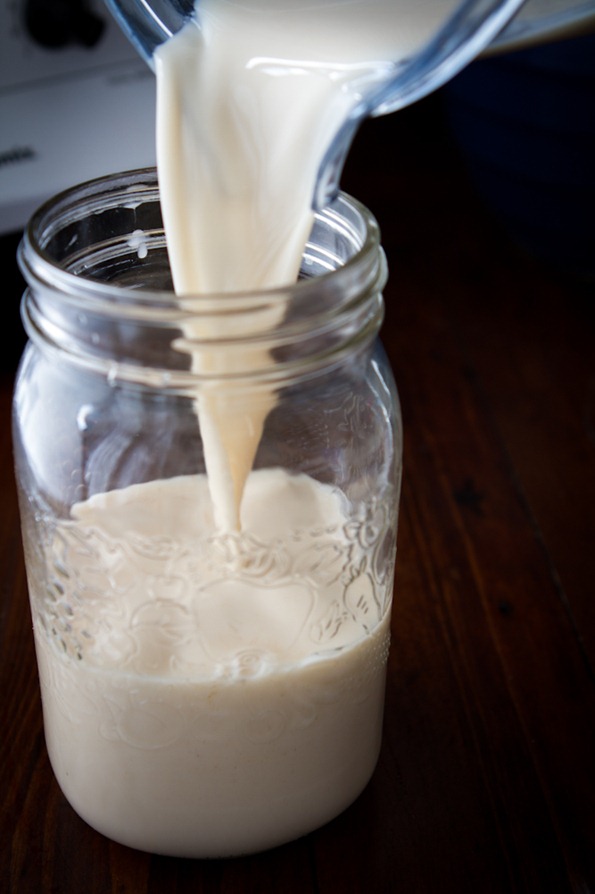
- I strained my milk one last time into a clean blender. Then I poured the milk from the blender into a clean mason jar for storage in the fridge.
Tip:
Notes: This should last in the fridge in a sealed container/jar for 4-5 days. Use it in smoothies, oatmeal, cereal, baking, or drink it straight. If you want to use it in a savoury recipe, you can omit the sweetener, vanilla, and cinnamon. Homemade milk does separate (remember there are no added emulsifiers!), so be sure to give your milk a very good shake (or stir) before using. No biggie. A little non-dairy milkshake never hurt anyone. I just don’t want you to be alarmed when you see the heavier ingredients sitting at the bottom of the jar.
This should last in the fridge in a sealed container/jar for 4-5 days. Use it in smoothies, oatmeal, cereal, baking, or drink it straight. If you want to use it in a savoury recipe, you can omit the sweetener, vanilla, and cinnamon.
Don’t let all the step-by-step photos fool you into thinking this is lengthy to make – it takes just 5 minutes once your oats are soaked.
Step 4:
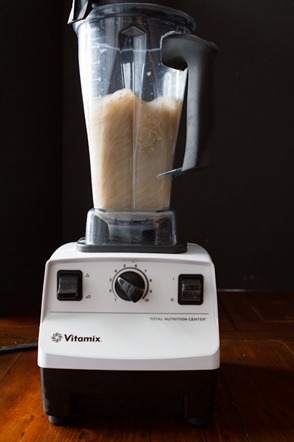
Step 5:
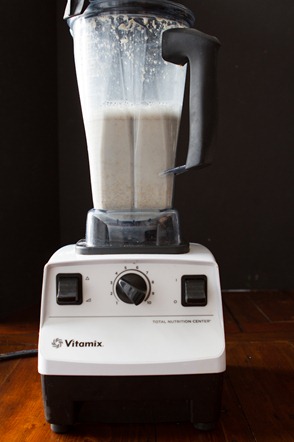
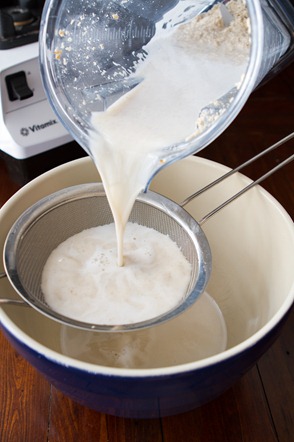
Step 6:
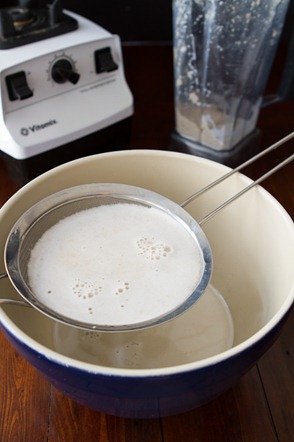
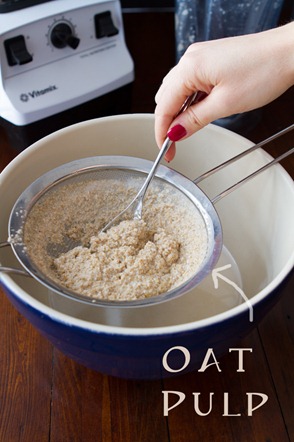
Step 8:
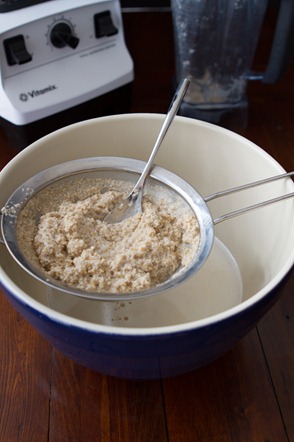
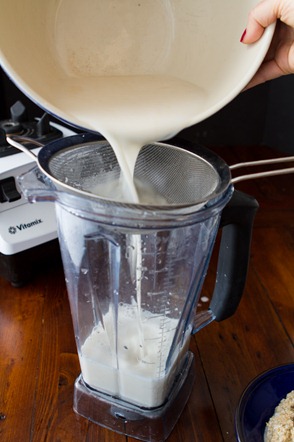
As you can see in the bottom left photo, straining twice gets even more pulp out yielding a smoother milk. I usually strain it 3 times or so, but it’s not necessary if you are time-crunched.
Step 9:
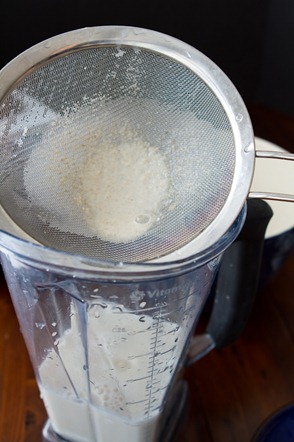
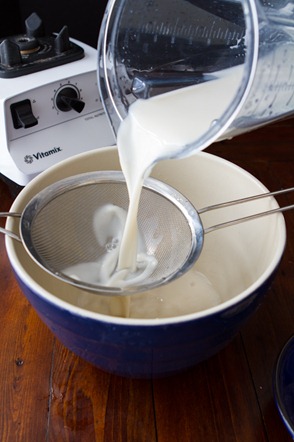
Step 10:
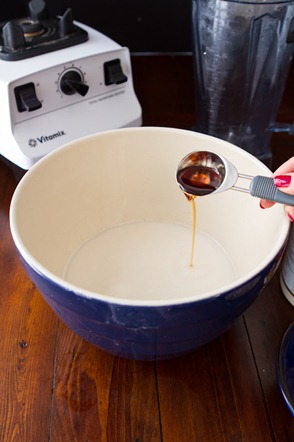
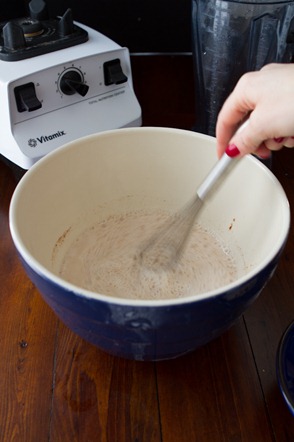
Step 11: I strained my milk one last time into a clean blender. Then I poured the milk from the blender into a clean mason jar for storage in the fridge.
Taste Report:
The flavour of this oat milk is much like I expected; it tastes like oats. Shocking, I know. The biggest challenge I had when testing this recipe was getting it creamy enough. I tried 1/2 cups steel-cut oats with 4 cups water and then 3/4 cups steel-cut oats with 3 cups water. I found both end results to be too watery. Using 1 cup of steel-cut oats to 3 cups of water was my favourite ratio (so far). If you play around with the recipe, I’d love to hear your versions too.
Keeping in mind that this homemade milk is free of emulsifiers and thickeners, I was fairly impressed with the texture. Is it just like store-bought milk? Of course not, but I do think it’s a decent option with a clean ingredient list. It’s much easier on the wallet too!
PROS:
- Very low cost (a batch using steel-cut oats cost me about 50 cents – or less if you can get a deal on oats)
- Nut-free so good for those with allergies
- Quick to make
- You don’t need a nut milk bag or cheesecloth
- Clean up was easy, even with all the spilling I seem to do…
- Decent, but not mind-blowing, flavour
CONS:
- Not as creamy compared to homemade almond milk
- Slightly watery (although this is improved when using 3 cups water instead of 4)
All in all, I feel that the pros outweigh the cons with this homemade oat milk. It’s so cheap to make and that is a huge plus for me. I personally don’t drink much milk by the glass so I think this will be just fine when added to cereal, smoothies, oatmeal, etc. But so far, I’ve been sipping the jar straight from the fridge, letting out satisfied mmm’s and dribbling milk down the front of my shirt. Eric, as always, is quite confident he married a weirdo.
Update: I tried the milk with some Nature’s Path cereal and it tasted a bit like cinnamon toast crunch, probably thanks to the cinnamon in the milk. yummy!
I also made a trial using cooked steel-cut oats and the milk turned out super slimy. I didn’t rinse the oats after cooking, but maybe I should have? I’m going to stick with the non-cooked method.
Odds are that some of you won’t like this milk at all, but it’s also likely that some of you will really enjoy it and appreciate this as a cheap, at-home alternative to the store-bought stuff. I’m quite anxious to see what you think and I welcome your feedback in the comments!
What can you do with the leftover oat pulp? I suggest saving it and mixing it into oatmeal and smoothies. If you have a dehydrator, I assume you could also dehydrate the pulp and then pulverize it in a blender to make flour. If anyone has any other ideas, leave ‘em below.
Have you ever made homemade oat milk or tried a store-bought version? Do you make your own milks at home? If so, what’s your favourite recipe?
Catching up in this series? See: Vegan How To: Introduction (Why this series?), Part 1: How To Make The Transition, Part 2: Replacing Dairy


Thanks for the great recipe! I usually make almond or brazil nut milk at home. I don’t have cheesecloth or a fine sieve to strain it, so I actually use pantyhose instead :) I bought from the drugstore a package of knee-high pantyhose, so I can wrap them around the top of a Mason jar and pour the milk straight in. And then I squeeze to get all the water/moisture out, then keep the pulp if I plan to use it for something, or just toss the pantyhose, pulp and all. A good use for leftover nut pulp is hummus – just add pulp to food processor with tahini, lemon juice, cumin, olive oil, and other spices and it’s a nice alternative.
Have just made this milk, it is awesome, from now on i am going to use this.
Thanks for a great recipe and site.
I have only just got round to trying almond milk myself! I may have to experiment in making my own and perhaps this recipe! Really enjoy your blog!
Here in Sweden oat-milk is the most popular non-dairy milk for sale. The one I usually buy contains only oats, water and a little salt. I don’t think I’ve come across one with carrageenan in it, and I can’t really see why it would be necessary, since it seems to work just fine without.
I’ve tried a variety of milks but not oat, maybe I will now that you have shown this super simple way of making it at home! I’m definitely a fan of trying to make products myself.
How about hemp milk, Angela? Have you tried making it?
Nope, not yet!
Made it just like you suggested. So yummy! Can’t wait to try almond milk! We have a family of 6 with a baby who drinks it in her bottle. Can’t wait for a cheaper alternative.
OMG, after reading all these comments about slimy, watery, artificial “milks” I’m so glad I’m so healthy and normal and can appreciate the wonderful, natural milk that is so graciously and easily produced by contented cows. I used to live on a dairy farm and there’s nothing comparable to fresh warm milk straight from the cow.
You realize she is vegan, right?! If that is your choice, then that’s totally fine. However, there is nothing wrong with being vegan, either. :)
I just got a masticating juicer for christmas and am going to try using it for this oat milk recipe. I tried almond milk the other day and the left over ‘paste’ was incredible. This morning I tried making milk with buckwheat groats. I soaked them for about a day and then ran them through my juicer twice. It was super slimy, and kind of bland, but I think they have some serious potential if I add cinnamon and vanilla.
P.S. I am lovin’ your Series!
so that’s how you make oat milk? :-) who would have thought that all you really need are oats and water. i’m sure i’d love it since i love oatmeal.
Angela, i think you can use the leftover oat pulp in the cakes and the cookies in order to replace part of the flour.
This looks great! How long does it keep in the fridge?
My little boy and I made oat milk this morning following your recipe…he immediately drank a huge glass, saying “YUM-me!!” in between gulps. Thank you!
I tried this recipe again tonight with steel-cut oats. So much creamier! The rolled oats will work in a pinch, but the result is much better with the steel-cut. I think this recipe is going to be a regular for me. Thanks so much!
Just wanted to add that so far I’ve mainly had soy milk, coconut milk and almond milk
But I finally sampled flax milk the other day! Tasted totally fine to me, I’ll be purchasing some and then maybe (hopefully) trying to figure out how to make it in future
I love all these options though, for vegan recipes and cooking!:)
Have you (or anyone?) tested how this holds up when added to hot dishes (coffee, soup, etc)? I’d really like to try this- it looks super easy and cost-effective! Thanks! I love your blog- beautiful and delicious recipes :)
Hi Audrey, I think a reader tried it in oatmeal and said it tasted quite watery. I haven’t personally tried it yet myself! goodluck
Thank-you so much for this post Angela! Made a batch the other day and absolutely loved it! Next batch of oats soaking and ready to make tonight :) Still trying to think of what to do with the left-over pulp though…
Thanks for this! the low cost is key. I mostly use soy or almond milk in coffee and chai, so i’ll try this! Do you know the caloric or protein content as compared w soy or almond milk?
Thank you for this recipe!!! I LOVE oat milk – but the supermarket version is still full of nasties so I am so happy to see a homemade version! Thank you!!! (From Australia)
Wow! I can’t believe how cheap and easy it is to make your own oat milk. This is definitely going on my to-do list.