
In my post, Replacing Dairy Milk, a few of you commented that you avoid several brands of non-dairy milk because they contain an ingredient called carrageenan. This was the first time I had heard anything about this ingredient, or at least the first time I took any notice. I assumed that it was a safe ingredient, especially because it is found in some organic products. But as we know, just because something is allowed in our food does not mean it’s necessarily good for us. It’s frustrating as a consumer to believe we are buying quality ingredients only to find out they could be harmful to our health.
Anyway, I knew I had to look into this further. And I don’t like what I’m reading. In fact, I’m pretty ticked off.
At first blush, carrageenan sounds seemingly harmless – it’s derived from red seaweed and is used as a thickener, stabilizer, and/or emulsifier in many dairy (sour cream, yogurt, ice cream, etc), dairy alternatives (non-dairy milk, non-dairy cheese, etc), and deli meat products. As it turns out, research links carrageenan to gastrointestinal inflammation, lesions, and even colon cancer in animals. Individuals with Inflammatory Bowel Disease or other gastrointestinal disorders are cautioned to avoid this ingredient as it can make symptoms – and inflammation – even worse. As someone who has suffered from IBS for many years, I was shocked to find this information out. This was the first I had heard of it.
For a review of the research on carrageenan see this PDF document by Cornucopia.org. Please look into this ingredient and make your own informed opinion.
For a long and detailed list of carrageenan in many dairy and non-dairy food products (and safe products as well), please see this Cornucopia shopping guide – it’s extremely helpful. You might be surprised at many of the brands that contain this ingredient. I know I sure was.
I realize there is no conclusive evidence with regard to human consumption of this ingredient, but I’m not willing to take that risk when there are other options, especially because I have suffered from IBS on and off for half my life. I will no longer support President’s Choice Organic Almond Milk or Blue Diamond’s Almond Breeze – two of several brands that contain carrageenan. Instead, I’m going to purchase Whole Foods 365 organic almond milk which is one of the carrageenan-free brands or I will make my own milk at home (more on this in my next post). I’m anxious to see if I notice a difference.
For the complete list of carrageenan-free products, be sure to check out the shopping guide linked above.
As I mentioned in my intro post, we have a lot to learn from each other and this is a perfect example. I’m thankful for all of you sharing your experiences and knowledge in the comments. I’m learning too. I hope that by writing about this today, more awareness is brought to this ingredient. With other thickeners/emulsifiers readily available (such as organic guar gum and organic locust bean gum) there is no excuse for food businesses to continue to put carrageenan into our food at the potential risk of our health.
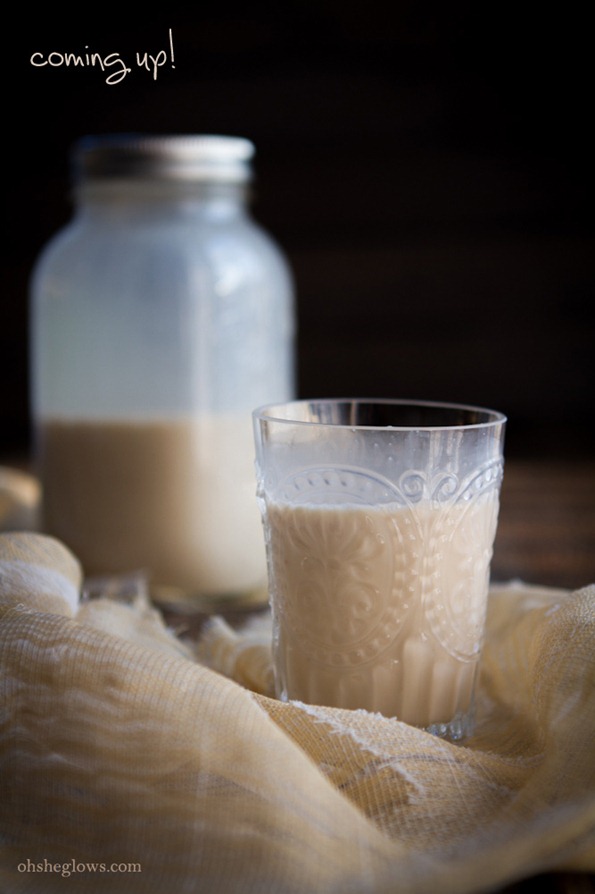
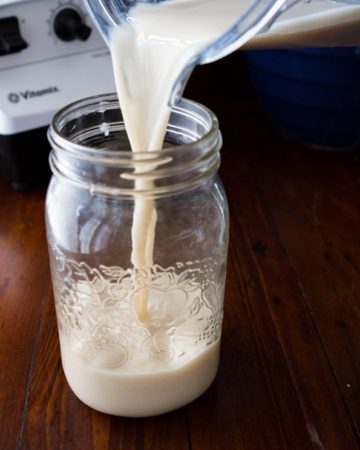
I was already planning a post on homemade milk, but now it seems even more timely and appropriate. Easy, homemade milk coming on up. I think you’ll really like the ingredients list in this one.
Have you heard anything about carrageenan before? Do you avoid it on labels or will you in the future?



Didn’t even notice that ingredient on the side of my milk carton. Usually if something is labeled vegan I dont even glance at the ingreidents list unless I’m comparing products. I’m surprised Trader Joe’s uses carrageenan in their products. Will have to try and find another almond milk brand or switch back to rice milk. Thanks so much for the info.
I feel the same about stevia. People blindly use this product because of all its marketing saying it’s “natural”, but there are plenty of natural things in this world that are very bad for us – e.g. tobacco.
According to my research stevia has links to cancer and infertility, I can’t believe people would rather put it into their bodies over a little honey or raw sugar.
Thank you for such an informative post, your blog is fantastic.
That is terrible! Thanks to your readers (and you!) for pointing this out. I’ll be reading labels and adjusting my future purchases accordingly.
This is an issue I’ve known about for awhile and I’m kind of on the fence about. I mean, it seems pretty obvious that carrageenan is likely pretty darn bad. That said, the only brands of soy milk I have available to me, Sunrich and Silk, both have it, and I’m not about to stop buying soy milk. I guess my thoughts on it right now are that I personally haven’t had a bad reaction to it (yet), and if it causes cancer, well, it seems like basically everything causes cancer these days. That said, I’d be thrilled if they stopped using it! But it’s probably not what I’m going to use my purchasing power to fight for right now. (Although if my local stores started carrying a carrageenan-free soy milk and I didn’t hate it, I’d probably switch to that.)
Sorry for the super long comment! I guess it took a while for me to sort out my thoughts haha.
Thanks for sharing Kacey, I know what you’re saying. It’s something everyone will have to decide for themselves ultimately and whether you feel like something could be off. Since I’ve had so many digestive issues over the years, I’m erring on the side of caution with this one and anxious to see if I notice any changes by removing it. And yes, the less strange ingredients the better in my opinion.
Really interesting post, I love how you’ve created a real community feel with everyone pitching in with their thoughts and findings. This is especially interesting to me at the moment as I am currently studying the T. Colin Campbell Plant Based Nutrition course which is questioning so many of my previously held ideas on plant based health.
Great post. A while ago I started reading the labels on soy and almond milk, and also read the Cornucopia reports. So – I am committed to only making my own almond and soy milk now. It’s easy, it tastes better, and it is way cheaper. Even using Italian unpasteurized organic (whew!) almonds!
Hello,
I am slightly concerned that a bit of internet research has led so many people to dismiss carregeenan. The evidence behind the safety of carregeenan is huge, and it is used very widely as a thickener in lots of foods and medications. As a medical researcher, I assure you, you would struggle to use any clinical gels, lotions, and syrups that didn’t have carregeenan in some form as a binder. In fact, it was recently being tested as a potential vaginal product to reduce the transmission of HIV (although other gels are proving more effective). Of course some people will have bad reactions to carregeenan, and some people will be allergic to it (like with anything), and there are probably some better formulations of carregeenan and some that are worse and have dangerous additives (again, like with any substance that originates with a natural ingredient and then is formulated with different components) BUT I don’t think this warrants outright panic over it.
Thank you, I was thinking this myself.
It’s the dose that makes the poison!
Thanks for your comment, that was exactly what I was thinking.
Think critical and don’t get obsessed about every single ingredient!
I agree. I’m a med student with my nose buried in books about illness pathology 24/7, so I’m always skeptical when someone says this-or-that can cause this-or-that. Correlation does not equal causation, everyone’s body is different, and the scientific research behind a claim has to be air-tight for me to believe it. I’m currently browsing the internet for opinions on carrageenan and I’m not the least bit impressed or swayed.
Agreed! Everything can become “evil” with a little Internet surfing.
I’m a few days late but have to chime in to agree with this thread. I’m a medical researcher as well, and this strikes me as unsubstantiated hype. I’ve really only briefly looked into carrageenan, but so far I don’t see any solid evidence that consuming carrageenan is harmful. Sure, researchers can induce inflammation by injecting carrageenan into rats– but it’s a HUGE leap to say that a carrageenan when eaten will cause inflammation in humans. Injection of high dose of a chemical into a rat body is so so so different than a human eating a small bit of a chemical.
Sure, if you have inflammatory conditions like celiac/IBS, it’s not going to kill you to try to cut a potentially inflammatory ingredient from your diet. There’s (probably) no proof that dietary carrageenan will or will not effect the cells lining your stomach.
For those of us with digestive issues and autoimmune disorders that we’ve been dealing with for 20+ years, YES, it does mean a small amount of panic. We aren’t just on some trend bandwagon, we don’t drink milk and have limited options. We are very careful to only buy products without carageenan or any extra ingredients that may cause inflammation or send us to the bathroom in the middle of a meeting and ruin our entire day by causing bloody constipation or diarrhea. Its like dodging bullets all day long to check labels and ask what is in every single thing we want to eat. If I want an apple, I don’t need it coated in sugar, oil, or wax. I want to eat a damn apple. We don’t need all these extra ingredients so corporations can make a profit. Their extra ingredients and hidden toxins are why most of us have become ill in the first place! Until you have a health issue, don’t claim that others are blowing things out of proportion. There is ONE brand out there without carageenan, in fact, I just went to Whole Foods tonite and my local store was out of ALL of the 365 Almond Milk and said they weren’t getting more in til August (its still June??!). So, I just spent $24.00 on raw almonds so I can make enough milk for the week. I dare you to start spending $24.00 for a container of $2.49 almond milk. You have no idea how some of us have to live.
If it helps, I replaced my Silk soy milk with Silk almond milk because it doesn’t have carrageenan, at least not in Canada.
I suppose a lot of what I eat creates a problem for a few. Then those people shouldn’t eat it. But so many of the “natural living” sites promote over-reaction. The amount of carregeenan I consume in a week is very small, pretty much like everyone else. So if it can be determined by good science that the stuff adversely affects you, don’t eat it or use it. Otherwise let’s not be promoting some level of hysteria out there.
I was very surprised to hear that carraggenen is used in medications. I used to drink soy milk to take my medications until I learned that it is supposed to decrease the efficacy of the medications. I had my pharmacist look into this and she said that medications should be taken at least an hour apart from it. I’m concerned about how many other people use a form of milk with carrageenan to take their medications.
Oh no :( Vegan cheeses also contain that ingredient :(
I agree with Joanna.
I think it’ is more that some people have issues with it, and like a lot of stuff it gets blown out of “well it is BAD!” just like a lot of people will say “Soy is bad for you because X-Y-Z” (which isn’t the case unless you are allergic, or eating funky stuff”or “Agave Nectar is bad for you”(which I personally don’t think is true unlesss you are eating it by the gallon-full).
People have been saying the same things about Brown Rice Syrup (being bad/deadly,etc), and people were like “Stop eating brown rice! don’t eat brown rice syrup,or brown rice flour!,etc”. I honestly feel unless you are super duper sensitive, than it shouldn’t be a problem right? (I mean a general “you” not just Angela “
I’m really glad you brought this up Ange. I’ve known about carrageenan for a while and figured that because it was derived from a seaweed, it must be pretty harmless (as you did). I didn’t know about the links to various diseases though. It’s amazing how many seemingly ‘whole food’ products contain extra ingredients like thickeners and stabilizers, and I think it just goes to show that home made and completely unprocessed is best. Not always practical from a time perspective, but when it’s your health we’re talking about, I think that’s a pretty important thing to spend time on!
Wow – I had never heard of this either. How annoying that it doesn’t get more press. Thanks for helping to raise awareness.
Wow…I use presidents choice almond milk as well. Thank you for finding an alternative that does not have this ingredient in it. I suffer from IBS as well and drink this every morning in my nutritional drink.
:(
As a person just recently switching to vegetarian and hoping to incorporate vegan things as well…the considerations are endless and overwhelming!
I have never used/drank much milk anyway, but I have been buying almond breeze lately. I will check my superstore for other options and be careful of other stuff I buy that might have it…just one more thing to remember as I try to be more diligent with the label-checking!
Best to be informed, though! Thanks Angela, I LOVE your blog!
A customer at Trader Joe’s where I’ve been working for 9 years told me about carrageenan years ago, so, like you, I did the research. What was most interesting was that now I had an answer if someone once again told me that they couldn’t figure out why they were still having digestion issues drinking a milk alternative. Nothing is suppose to be consumed in excess, and I really don’t think a little carrageenan is going to hurt me, although I would like to still avoid it now if I can. There was a back and forth for a while on Amazon.com about the Artesian Vegan Cheese book’s recipes often calling for carrageenan. I still bought the book, and will try to substitute carrageenan with agar powder like we all figured we would do. We could all move on to the subject of agave being all that it claims, particularly now that it’s being used about as much as saccharine was back in the day in “diet” foods.
buenas suerte!
Thank you for writing about this! I had no idea! I’m vegan and I have IBS. I’m definitely going to start checking my labels more closely.
I’ve never heard of this before so I’m really glad you posted about it! I sometimes buy Almond Breeze milk but definitely won’t be anymore…I have a hard time finding organic almond milk here, do you know if Trader Joe’s unsweetened almond milk is okay?
I think I remember it saying TJ’s was fine, but double check the shopping list I linked to just to be sure.
perfect, thank you!
I believe the refrigerated version is fine.
SO MUCH FOR THE MYTHS CONSIDER THE FACTS ON CARRAGEENAN FOR A CHANGE
Q. What is Carrageenan??
A. Carrageenan is a naturally-occurring seaweed extract. It is widely used in foods and non-foods to improve texture and stability. Common uses include meat and poultry, dairy products, canned pet food, cosmetics and toothpaste.
Q. Why the controversy?
A. Self-appointed consumer watchdogs have produced numerous web pages filled with words condemning carrageenan as an unsafe food additive for human consumption. However, in 70+ years of carrageenan being used in processed foods, not a single substantiated claim of an acute or chronic disease has been reported as arising from carrageenan consumption. On a more science-based footing, food regulatory agencies in the US, the EU, and in the UN’s Food and Agriculture Organization/World Health Organization (FAO/WHO) repeatedly review and continue to approve carrageenan as a safe food additive.
Q. What has led up to this misrepresentation of the safety of an important food stabilizer, gelling agent and thickener?
A. It clearly has to be attributed to the research of Dr. Joanne Tobacman, an Associate Prof at the University of Illinois in Chicago. She and a group of molecular biologists have accused carrageenan of being a potential inflammatory agent as a conclusion from laboratory experiments with cells of the digestive tract. It requires a lot of unproven assumptions to even suggest that consumption of carrageenan in the human diet causes inflammatory diseases of the digestive tract. The objectivity of the Chicago research is also flawed by the fact that Dr Tobacman has tried to have carrageenan declared an unsafe food additive on weak technical arguments that she broadcast widely a decade before the University of Chicago research began.
Q. What brings poligeenan into a discussion of carrageenan?
A. Poligeenan (“degraded carrageenan” in pre-1988 scientific and regulatory publications) is a possible carcinogen to humans; carrageenan is not. The only relationship between carrageenan and poligeenan is that the former is the starting material to make the latter. Poligeenan is not a component of carrageenan and cannot be produced in the digestive tract from carrageenan-containing foods.
Q. What are the differences between poligeenan and carrageenan?
A. The production process for poligeenan requires treating carrageenan with strong acid at high temp (about that of boiling water) for 6 hours or more. These severe processing conditions convert the long chains of carrageenan to much shorter ones: ten to one hundred times shorter. In scientific terms the molecular weight of poligeenan is 10,000 to 20,000; whereas that of carrageenan is 200,000 to 800,000. Concern has been raised about the amount of material in carrageenan with molecular weight less than 50,000. The actual amount (well under 1%) cannot even be detected accurately with current technology. Certainly it presents no threat to human health.
Q. What is the importance of these molecular weight differences?
A. Poligeenan contains a fraction of material low enough in molecular weight that it can penetrate the walls of the digestive tract and enter the blood stream. The molecular weight of carrageenan is high enough that this penetration is impossible. Animal feeding studies starting in the 1960s have demonstrated that once the low molecular weight fraction of poligeenan enters the blood stream in large enough amounts, pre-cancerous lesions begin to form. These lesions are not observed in animals fed with a food containing carrageenan.
Q. Does carrageenan get absorbed in the digestive track?
A. Carrageenan passes through the digestive system intact, much like food fiber. In fact, carrageenan is a combination of soluble and insoluble nutritional fiber, though its use level in foods is so low as not to be a significant source of fiber in the diet.
Summary
Carrageenan has been proven completely safe for consumption. Poligeenan is not a component of carrageenan.
Closing Remarks
The consumer watchdogs with their blogs and websites would do far more service to consumers by researching their sources and present only what can be substantiated by good science. Unfortunately we are in an era of media frenzy that rewards controversy.
Additional information available:
On June 11th, 2008, Dr. Joanne Tobacman petitioned the FDA to revoke the current regulations permitting use of carrageenan as a food additive.
On June 11th, 2012 the FDA denied her petition, categorically addressing and ultimately dismissing all of her claims; their rebuttal supported by the results of several in-depth, scientific studies. If you would like to read the full petition and FDA response, they can be accessed at http://www.regulations.gov/#!searchResults;rpp=25;po=0;s=FDA-2008-P-0347
Is this the same Harris J. (‘Pete’) Bixler (Treasurer) that works for the International Seaweed Association? … Suspect
A government source? LOL
If the FDA dismissed Dr. Tobacman’s petition, then I KNOW the good Doctor was right! I worked in a health food store for a number of years and have done much research – as much as possible anyway on this topic. It is true she (Dr. Tobacman) petitioned the FDA and was denied. I cannot base this post on trust that the FDA is watching out for all Americans. The FDA is a farce – therefore, this girl has eliminated carageenan completely out her diet.
Hi Dr. Harris J. Bixler, I just saw that you are trying to repost this entire comment under a different name (“Debbie” but with exact same IP address) at the top of this comments section – why do you feel the need to post your comment twice? Could it be because you work for the seaweed association? http://www.isaseaweed.org/council.php I’ve noticed that you have posted this exact comment on several blogs talking about carrageenan. Everyone is entitled to their own opinion (as are you) I just ask that you don’t spam my comments section. Thank you, Angela
My apologies for the duplication. Dr. Bixler is the author of the Q&A. I did not realize his paper had already been posted here. I did not intent for it to be spam. You are correct, everyone is entitled to his or her opinion, I’m just trying to get the facts on carrageenan out to the public. There is so much on the web regurgitating misinformation about carrageenan, I have no doubt that there are people with legitimate allergies to carrageenan just as there are people with allergies to peanuts, latex, and countless other things, my point is that carrageenan that is used in food products is not carcinogenic, if I believed it was I would avoid it myself.
Again, apologies for the duplication and thank you for the opportunity to post my opinion.
Well I was going to ignore this post on the evils of carrageenan, but now that Debbie aka (Dr. Harris J. Bixler ScD) has clearly informed me of carrageenan’s inability to withstand high temperatures; I am concerned. During the winters months i was warming my “milk” up on the stove. If carrageenan can’t withstand boiling point temperatures & strong acid for more then six hours before there molecules begin to pull together and tighten, to produce this new chemical poligeenan; then how can the FDA know for certain someone won’t try to produce a new recipe in this same way? Maybe not as strong of an acid or as long to boil it for six hours. Still, I think it’s a weak base to stand on with the possibilities that can arise. Even if you need a strong acid and to boil the carrageenan for six hours, can’t the molecules still tighten slightly with a weaker acid and a lower boiling point? That in turn would still cause the carrageenan to become a slow “killer’, and or still make it a carcinogen?
*”Poligeenan (“degraded carrageenan” in pre-1988 scientific and regulatory publications) is a possible carcinogen to humans”.
I think for now I will not be heating my carrageenan type “milks”, and be on the look out for a “milk” type product that doesn’t contain a potential threat to my body.
Debbie works for Ingredient Solutions Inc., the world’s largest independent carrageenan supplier, FYI. She’s admitted it when she’s called out on it in other blogs. In one, she wrote, “Yes, I am associated with Ingredients Solutions, Inc., and I am proud to be a part of the ISI family. Being part of ISI I am in a unique position to see first hand that carrageenan is a safe ingredient that actually provides manufacturers with options to reduce the sodium and fat content in their products which in turn makes them healthier to consumers. It is also used in many vegan applications as well as providing kosher options. I know there are a lot of studies that put carrageenan in a bad light but what most people don’t understand is that those studies are not performed in a way that would replicate carrageenan in the human diet. So yes, I work for the World’s Largest Independent Supplier of Carrageenan and I eat foods every day that contain carrageenan.”
Wow! I just wanted to say that I was browsing your recipes, and fumbled upon this topic, and that reply from “Dr Bixler”…As a researching food scientist and teaching assistant in confectionary sciences at an accredited university in the US, and having multiple career experiences relating to Quality and Regulatory Operations and food manufacturing under my belt, I have learned one thing about food additives: they are typically used to make the lives of the manufacturing company easier, usually involve making the food “pretty” (like not separating), and come from cheap sources. It is truly up to the consumer to be aware and savvy-so good for you for being attentive to that ingredient deck; it is powerful, and you must never stop reading it! The horrible thing, though, is that some regulations actually permit the use of “processing aids”, like silicone (yes, the fake-boob material), and not label the, in the ingredient deck.
Carageenan comes in several forms (for example, kappa carageenan); it is classified as a food “hydrocolloid”. This category of molecules is huge-and they are widely used (for example, xanthan gum, guar gum, carboxyl methyl cellulose), and come from a myriad of sources-all of which are not equal.
Carageenan has sulfur-containing reactive or functional groups. This sulfur content is what triggers inflammatory factions in many people (myself included). The same could be said for the cruciferous and brassica veggies we love (broccoli anyone?), but the difference is the level of refinement (natural form vs. un-natural form)
Carageenan is used in chocolate milks and other products that benefit from suspending particulates while on the shelf. However, carageenan exhibits a property known as “shear thinning”. What happens is when you suddenly pour the suspension, the viscosity decreases, easing the pour. Once in the vessel, the liquid re-gains the normal viscosity, which suspends the particles (like cocoa solids!). Indeed, I was personally ashamed and alarmed when a local dairy (I am from Wisconsin, so it means a lot to me, even if I don’t drink milk!!) started to use carageenan in their chocolate milk. What has this world come to?
If you’d like to know more, I have countless UNBIASED resources. Keep up the good work, and keep being an educated consumer-our world needs more of us!!
Thank you. Very helpful and well written. It is always good to get information from various sources
i was looking into carageenan, and stumbled over here. If you have any unbiased resources, I would really love to check them out (currently in university so my tuition allows me access to scientific journals/databases and what not). So far, i have basically read what you have said in regards to carageenan showing harmful results in its degraded form (poligeenan?). I’m still confused as to how much or significant of a role it plays in our bodies though, but I would like to learn more for sure.
It’s interesting that use isn’t even brand specific. When you look at the chart, one brand with multiple products – some use it, some don’t.
I noticed this too…I wonder why they do this? If one way works, you’d think they’d use it in all of them. Or perhaps, some of the brands are making the change gradually. It might be worth asking!
I’m sick to my stomach–pardon the pun–reading this. My flax milk, I see, is full of it, and it makes me wonder if this is why my lip keeps swelling and I still have occasional intestinal issues. Time to switch to soy, extra estrogen be damned.
Hi Angela,
Although I share the wonderfulness & creativity of your posts daily with my readers at both Raw Food Rehab & Upgrade Your Plate, I’ve not been a good blogger friend in that I never leave you comments. Today seems like the perfect time to let you know that I deeply appreciate all that you do and posts like this are really important to share. I am a life-long IBS sufferer, and have never looked into carrageenan, other than to know it was a seaweed – I mean how bad could that be, right? Well, thanks for your research and now I know what to look for and what not to buy for me and my family.
Keep up the amazing work….
Love & respect,
Penni Shelton
Thank you Penni, I appreciate it! I hope you find relief for your symptoms too
Hi Angela,
I love your blog. I’ve hope you don’t mind that I am a former vegan/veg but I still adore your blog. I found out approx 6 months ago about carrageenan. Please don’t cringe when I tell you this, I also found out that my diet/lifestyle was contributing to my health problems. I had bloodwork that showed I have intestinal permeability, so not only was that additive contributing to my inflammation and pain, but grains and legumes as well. I still am veg at heart, but I know from trial and error that I was never sicker. I am reading you posts on becoming vegan with interest as well, because I don’t know where I went wrong. Has anyone else had this experience? Can it be that vegan does not work for everyone? Trust me, I am not in the Paleo bacon camp, but for the moment I had to add lean animal protein with tons of veggies/fruit, limited nuts and seeds as this also causes inflammation. I am finally pain free and not to be TMI, use the bathroom normally. P.S. Awesome almond milk demo on youtube for milk made with ice, water, and soaked dates and nuts. Best I found. Thank you.
I personally don’t think there is a one size fits all approach to food/diet when it comes to anyone. We each have to figure it out for ourselves. I’m sorry that you had problems with grains and legumes, but at least now you are aware of it and can make appropriate changes to feel better.
Nettie, how did you find out about your intestinal permeability? I think I may have that issue as well, but when I asked, my doctor said there’s no test for it.
I’m glad you found out what food makes you feel best.
And Angela, thanks for bringing up the subject of carrageenan. I’d heard of it, and always felt slightly discomfited, but just thought it was a moss or seaweed. It seems Sharla may be right – growing/making everything yourself seems the only way to guarantee a safe food product!
I was just recently diagnosed with IBS after my c- section. It sucks. I’m not 100% positive as to that being what I have, but I’ve been vegan for ….nearly 13 yrs, and am trying to watch ingredients. I had heard that carageenan may not be good, but didn’t realize it directly related to gut problems. I am going to buy a different milk as well, and see if it helps. Thank you so much. Nice to know I’m not alone.